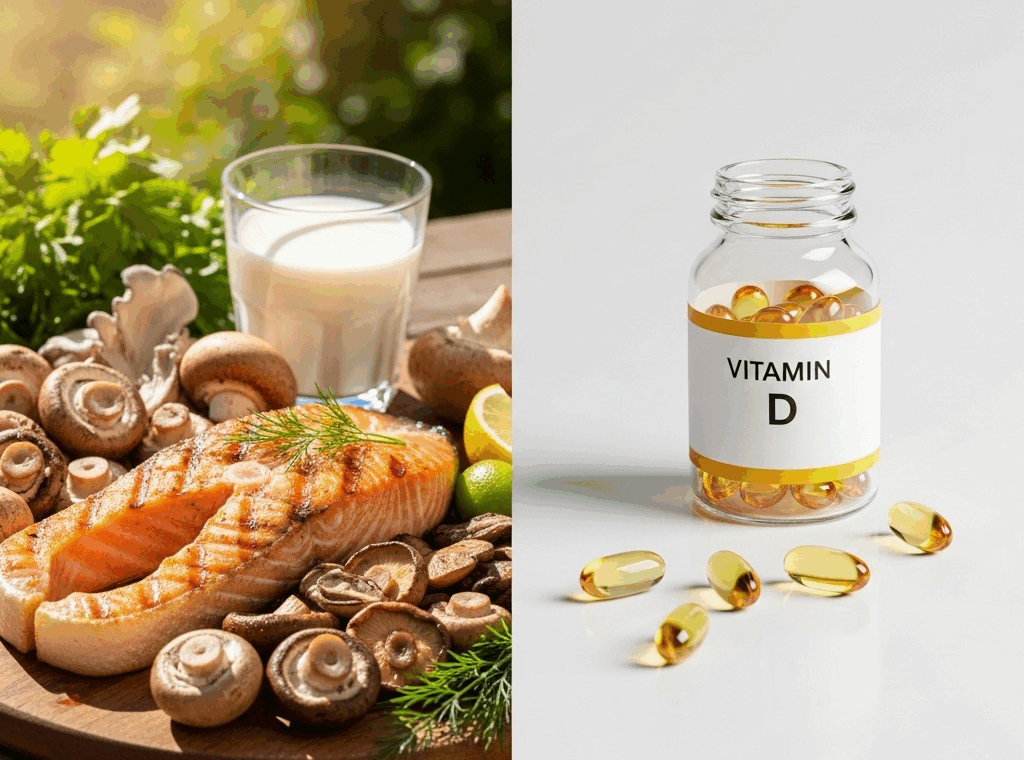

The Sunshine Vitamin Showdown
Food Sources vs. Supplements – What’s the Best Way to Get Your Vitamin D?
It’s often called the “sunshine vitamin,” and for good reason. Vitamin D is a unique, fat-soluble nutrient that our bodies can produce when our skin is exposed to sunlight. But in an era of indoor work, diligent sunscreen use, and varying climates, are we getting enough? And if not, should we turn to our diet or a supplement bottle? This guide answers your most pressing questions.
Frequently Asked Questions About Vitamin D
What is Vitamin D and why do I need it?
Unlike most vitamins, Vitamin D functions like a pro-hormone. Once produced in the skin or ingested, it’s converted in the liver and kidneys into its active form, calcitriol. This active form travels throughout the body, influencing a vast array of physiological processes.
Key Roles of Vitamin D:
- Bone Health: Essential for calcium absorption, preventing rickets in children and osteoporosis in adults.
- Immune System Modulation: Helps activate immune cells to fight infections and may play a role in managing autoimmune conditions.
- Mood and Mental Health: Linked to mood regulation. Low levels are associated with conditions like Seasonal Affective Disorder (SAD).
- Muscle Function: Crucial for muscle strength and function, helping reduce the risk of falls, especially in older adults.
- Cardiovascular Health: Emerging research suggests a link between sufficient levels and a lower risk of hypertension and heart disease.
How do we get Vitamin D from sunlight, and what are the limitations?
Our bodies are designed to produce Vitamin D from sunlight. When ultraviolet B (UVB) rays hit the skin, a cholesterol precursor is converted into Vitamin D3 (cholecalciferol).
However, many factors can limit this natural production:
- Geography and Season: In places like Spring, Texas, you get ample sun most of the year. But in northern latitudes, the sun isn't strong enough for Vitamin D synthesis from November to March.
- Skin Pigmentation: Darker skin has more melanin, which acts as a natural sunblock and requires longer sun exposure to produce the same amount of Vitamin D.
- Sunscreen: An SPF 30 sunscreen can reduce Vitamin D production by over 95%.
- Age: Skin becomes less efficient at producing Vitamin D as we get older.
- Lifestyle: Spending most of the day indoors limits sun exposure significantly.
What are the best food sources of Vitamin D?
Relying solely on food for Vitamin D is challenging, as very few foods are naturally rich in it. Fortification is key for many dietary sources.
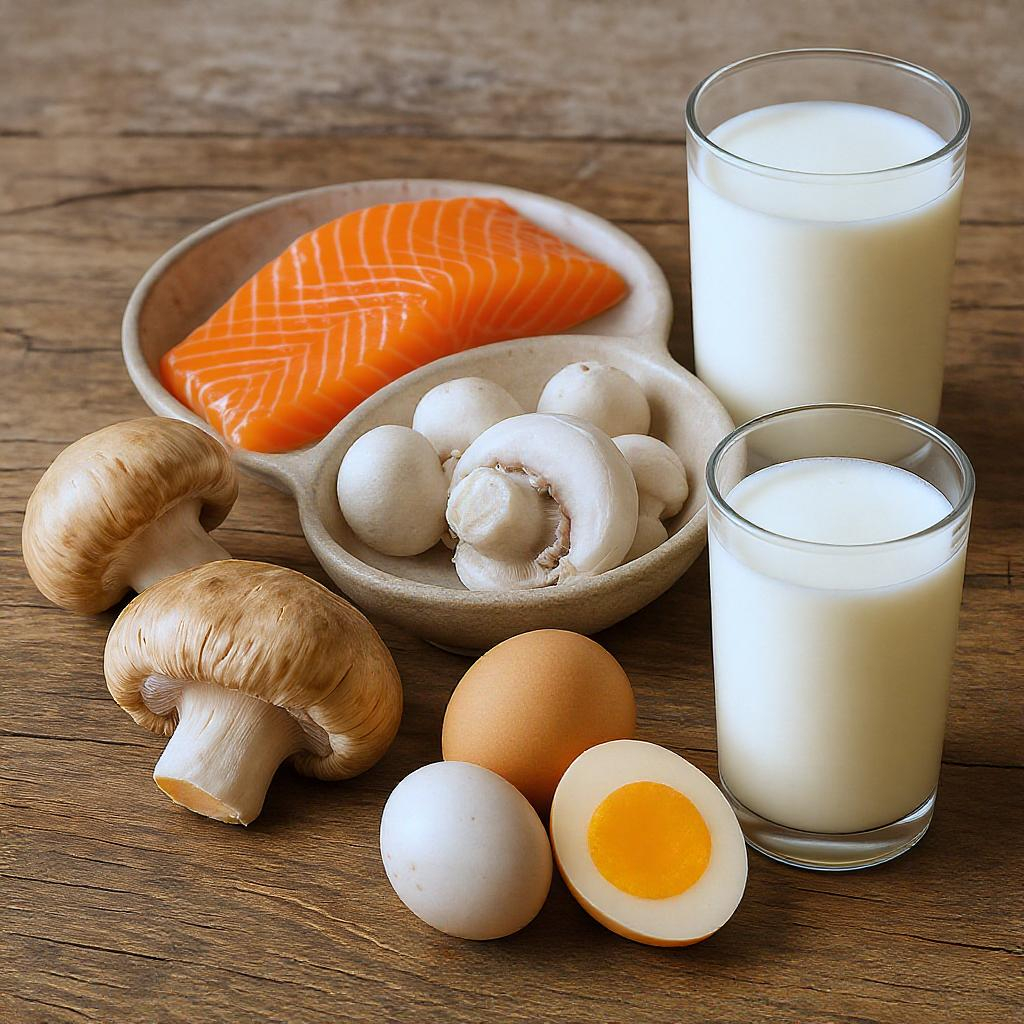
| Food Source | Serving Size | Approximate Vitamin D (IU) |
|---|---|---|
| Cod Liver Oil | 1 tablespoon | ~1,360 IU |
| Swordfish, cooked | 3 ounces | ~566 IU |
| Salmon (Sockeye), cooked | 3 ounces | ~447 IU |
| Tuna (canned, in water) | 3 ounces | ~154 IU |
| Fortified Milk (all types) | 1 cup | ~120 IU |
| Fortified Orange Juice | 1 cup | ~100 IU |
| Sardines, canned | 2 sardines | ~46 IU |
| Beef Liver, cooked | 3 ounces | ~42 IU |
| Egg Yolk | 1 large | ~41 IU |
| UV-Exposed Mushrooms | 1/2 cup | Varies, >400 IU |
Source: National Institutes of Health (NIH) Office of Dietary Supplements
Pros: Getting nutrients from whole foods provides other benefits like fiber, protein, and healthy fats. It's almost impossible to reach toxic levels from food.
Cons: It's very difficult to meet daily needs through diet alone, especially for those with higher requirements.
When should I consider taking a Vitamin D supplement?
For many, supplements are a necessary and effective way to ensure adequate Vitamin D levels. Consider supplementation if you:
- Live in northern climates with long winters.
- Are an older adult.
- Have darker skin pigmentation.
- Have limited sun exposure (e.g., office workers, homebound individuals).
- Have a medical condition that affects fat absorption (like Crohn's or Celiac disease).
- Are obese (BMI > 30).

Pros of Supplements: They provide a convenient and reliable dose, making it easy to correct a deficiency and maintain healthy levels.
Cons of Supplements: There is a risk of toxicity with excessive intake. It's important to choose high-quality products (look for USP or NSF certification) and follow your doctor's advice.
Is Vitamin D3 better than D2?
Yes. Vitamin D comes in two main forms: D2 (ergocalciferol) from plants and D3 (cholecalciferol) from animal sources and sun exposure.
The scientific consensus, supported by research such as a meta-analysis in the American Journal of Clinical Nutrition, shows that Vitamin D3 is significantly more effective at raising and sustaining Vitamin D levels in the blood compared to Vitamin D2. For supplementation, D3 is the preferred choice.
How much Vitamin D should I take?
The only way to know your Vitamin D status for sure is to ask your doctor for a 25-hydroxyvitamin D [25(OH)D] blood test.
Blood Level Guidelines (ng/mL):
- Deficient: Less than 20 ng/mL
- Insufficient: 21-29 ng/mL
- Sufficient: 30 ng/mL or greater
The Recommended Dietary Allowance (RDA) is 600 IU/day for most adults and 800 IU/day for those over 70. However, your doctor may recommend a higher dose based on your blood test results, especially to correct a deficiency. Do not exceed 4,000 IU/day without medical supervision.
3 Comments
This is exactly what i was looking for, thank you so much for these tutorials
It would be great to try this theme for my businesses
What a nice article. It keeps me reading more and more!