Are Multivitamins Necessary?
A deep dive into the science behind the billion-dollar question. Is your daily multivitamin an insurance policy or an expensive habit?
The Verdict for the General Population
For the average, healthy adult, the primary motivation for taking a multivitamin is to prevent chronic disease. Decades of high-quality research have put this to the test. The chart below summarizes the scientific consensus. Hover over the bars for details.
Targeted Nutrition: Who Genuinely Needs a Supplement?
While not for everyone, supplementation is a medical necessity for specific groups with higher nutrient needs or impaired absorption. Click a card to learn more.
Navigating the Risks
The perception that vitamins are inherently safe is a dangerous fallacy. High doses can be toxic. Click on a nutrient to understand its Tolerable Upper Intake Level (UL) and the potential dangers of excess.
The Food-First Philosophy
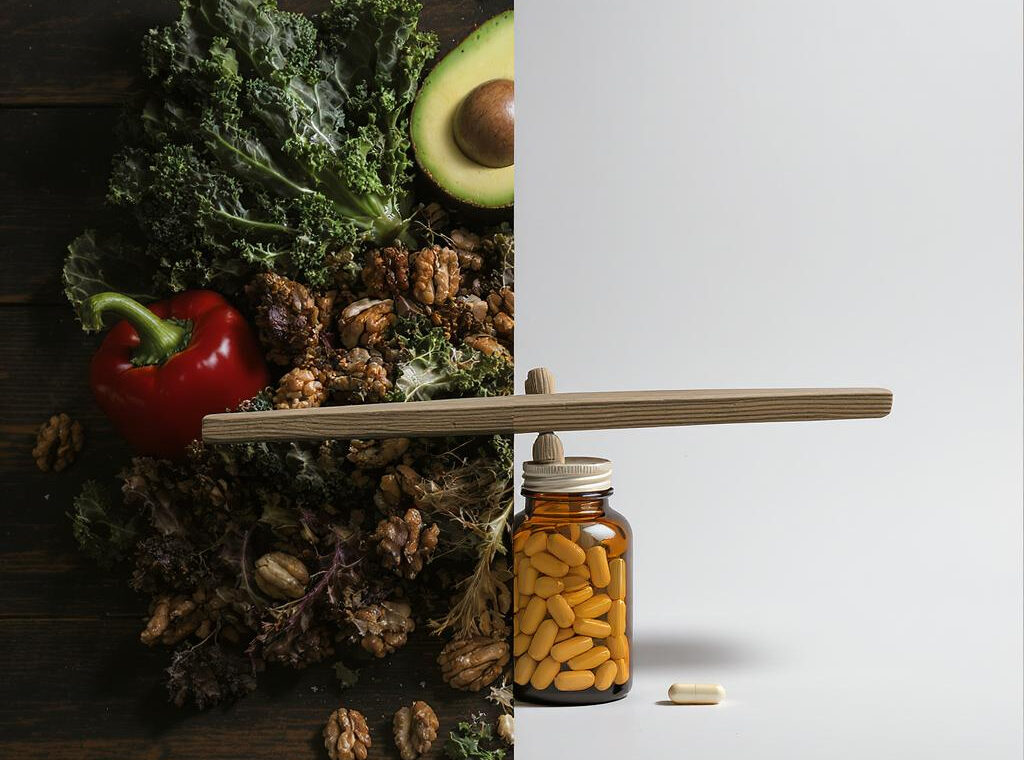
The evidence overwhelmingly points to a foundational strategy for health: prioritize obtaining nutrients from a balanced diet of whole foods. The complex synergy of vitamins, minerals, fiber, and phytonutrients in food cannot be replicated in a pill.
See the Action Plan



Your Actionable Framework
Move from the "shotgun" approach to a precise, personalized strategy for your nutritional health.
1. Prioritize a Food-First Diet
Build your foundation on a diverse diet rich in fruits, vegetables, whole grains, and lean proteins.
2. Assess Your Individual Needs
Consider your life stage, diet, and health conditions. Do you fall into a group with a demonstrated need?
3. Consult a Professional
Talk to your doctor or a registered dietitian. Get blood tests to confirm any deficiencies instead of guessing.
4. Supplement Smartly
If needed, use targeted supplements. Always choose products with third-party verification (like USP or NSF) to ensure quality and safety.
References
[1] Council for Responsible Nutrition (CRN). (2023). 2023 CRN Consumer Survey on Dietary Supplements.
[2] Kantor, E. D., et al. (2016). Trends in Dietary Supplement Use Among US Adults From 1999-2012. JAMA.
[3] National Center for Complementary and Integrative Health (NCCIH). (2021). Vitamins and Minerals.
[4] Mursu, J., et al. (2011). Dietary supplements and mortality rate in older women. Archives of Internal Medicine.
[5] Johns Hopkins Medicine. Is There Really Any Benefit to Multivitamins?.
[6] Harvard T.H. Chan School of Public Health. The Nutrition Source: Vitamins and Minerals.
[7] National Institutes of Health (NIH) Office of Dietary Supplements. Fact Sheet for Health Professionals: Multivitamin/mineral Supplements.
[8] Marra, M. V., & Bailey, R. L. (2018). Position of the Academy of Nutrition and Dietetics: Micronutrient Supplementation. Journal of the Academy of Nutrition and Dietetics.
[9] Institute of Medicine (US) Committee on Diet and Health. (1989). Diet and Health: Implications for Reducing Chronic Disease Risk.
[10] Shenkin, A. (2006). The key role of micronutrients. Clinical Nutrition.
[11] Institute of Medicine (US) Committee to Review Dietary Reference Intakes for Vitamin D and Calcium. (2011). Dietary Reference Intakes for Calcium and Vitamin D.
[12] Holick, M. F. (2007). Vitamin D deficiency. New England Journal of Medicine.
[13] NIH Office of Dietary Supplements. Fact Sheet for Health Professionals: Vitamin B12.
[14] U.S. Department of Agriculture and U.S. Department of Health and Human Services. Dietary Guidelines for Americans, 2020-2025.
[15] Vermeer, C. (2012). Vitamin K: the effect on health beyond coagulation. Food & Nutrition Research.
[16] Kim, J., et al. (2018). Association of Multivitamin and Mineral Supplementation and Risk of Cardiovascular Disease. Circulation: Cardiovascular Quality and Outcomes.
[17] Jenkins, D. J. A., et al. (2018). Supplemental Vitamins and Minerals for Cardiovascular Disease Prevention and Treatment. Journal of the American College of Cardiology.
[18] U.S. Preventive Services Task Force (USPSTF). (2022). Vitamin, Mineral, and Multivitamin Supplementation to Prevent Cardiovascular Disease and Cancer. JAMA.
[19] Fortmann, S. P., et al. (2013). Vitamin and mineral supplements in the primary prevention of cardiovascular disease and cancer. Annals of Internal Medicine.
[20] Gu, F., et al. (2021). The effect of multivitamin and mineral supplements on cancer incidence. Cancer Management and Research.
[21] Neuhouser, M. L., et al. (2009). Multivitamin use and risk of cancer and cardiovascular disease in the Women's Health Initiative cohorts. Archives of Internal Medicine.
[22] Hercberg, S., et al. (2010). The SU.VI.MAX Study. Archives of Internal Medicine.
[23] The Alpha-Tocopherol, Beta Carotene Cancer Prevention Study Group. (1994). The effect of vitamin E and beta carotene on the incidence of lung cancer and other cancers in male smokers. New England Journal of Medicine.
[24] Omenn, G. S., et al. (1996). Effects of a combination of beta carotene and vitamin A on lung cancer and cardiovascular disease. New England Journal of Medicine.
[25] Loftfield, E., et al. (2024). Multivitamin Use and Mortality Risk in 3 Large Prospective Cohorts. JAMA Network Open.
[26] National Cancer Institute. (2024). Daily multivitamin use not linked to lower risk of death.
[27] Macpherson, H., et al. (2013). Multivitamin-multimineral supplementation and mortality. The American Journal of Clinical Nutrition.
[28] Bjelakovic, G., et al. (2013). Meta-regression analyses...of the effects of supplementation with beta-carotene, vitamin A, and vitamin E...on all-cause mortality. PLoS One.
[29] Miller, E. R., 3rd, et al. (2005). Meta-analysis: high-dosage vitamin E supplementation may increase all-cause mortality. Annals of Internal Medicine.
[30] Yeung, L. K., et al. (2023). Multivitamin Supplementation for Prevention of Cognitive Decline. Annals of Internal Medicine.
[31] Rutjes, A. W., et al. (2018). Vitamin and mineral supplementation for maintaining cognitive function... Cochrane Database of Systematic Reviews.